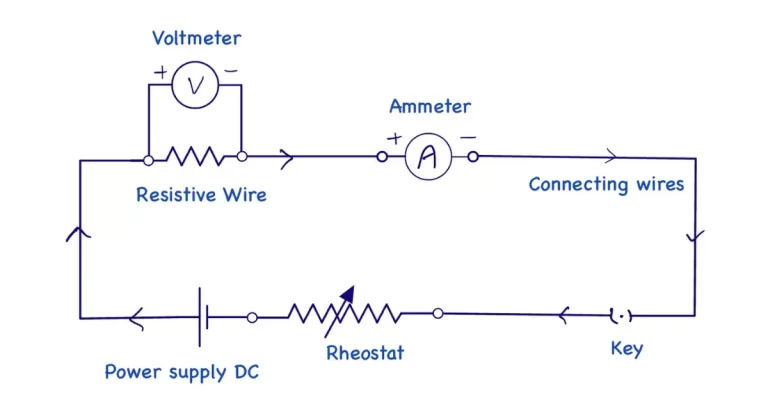
Aim To determine the equivalent resistance of two resistors when connected (a) in series and (b) in parallel, and to verify the laws of combination of resistors. Apparatus and Material Required Two resistors (R1 and R2), a battery or battery eliminator (0–6 V), an ammeter (0–3 A), a voltmeter (0–5 V), a rheostat, a plug key,…
Aim To determine resistivity of two wires by plotting a graph for potential difference versus current. Apparatus and Material Required Principle According to Ohm’s Law, the current passing through a conductor is directly proportional to the voltage applied across it, as long as the conductor’s temperature and other physical properties remain constant. If I be the…
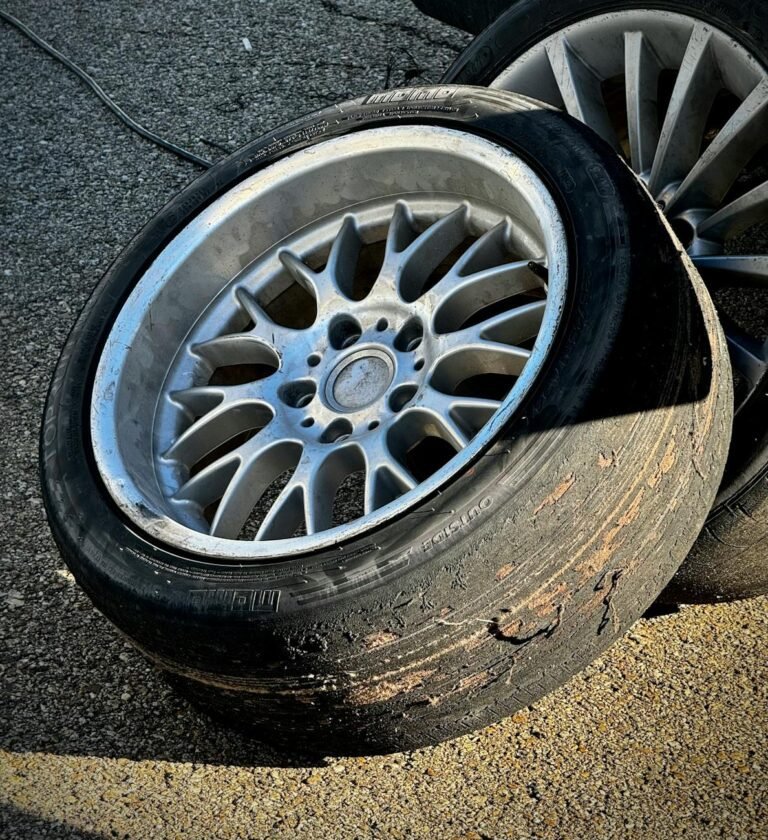
Definition of Friction: Types of Friction: Comparison of Friction Types: Static friction > Sliding friction > Rolling friction Causes of Friction: Factors Affecting Friction: Advantages of Friction: Disadvantages of Friction: Ways to Increase Friction: Ways to Reduce Friction: Drag or Fluid Friction:
Aim To measure diameter of a given wire and thickness of a given sheet using screw gauge. Apparatus and Material Required Principle A screw gauge works on the principle of a screw. When a screw is rotated in a nut, the linear distance moved by it is directly proportional to the number of rotations given to…
Frequently Asked Questions (FAQs) on Motion Q1: What is motion? Ans: Motion is the change in an object’s position with time. It can be observed directly, such as a car moving, or inferred indirectly, like the movement of dust particles indicating air motion. Q2: How can we describe the position of an object? Ans: The…
Conversion of Galvanometer into Voltmeter or Ammeter – Viva Questions Experiment Aim The aim of this experiment is to convert a given galvanometer of known resistance and figure of merit into a voltmeter or an ammeter of desired range and then verify its performance. Apparatus Used This experiment uses a moving coil galvanometer, suitable resistances,…